How to Teach a Child to Skate: A 7-Day Plan for Parents
You do not need to be a skater to teach your child to skate. What you need is a flat surface, the right gear and a plan that moves one small step at a time. Most children go from standing to gliding within a week of short sessions.
This guide gives you that plan, day by day. It works for quad skates and inline skates, although quads make the first days easier.
Before the first lesson
Get three things ready before your child puts the skates on.
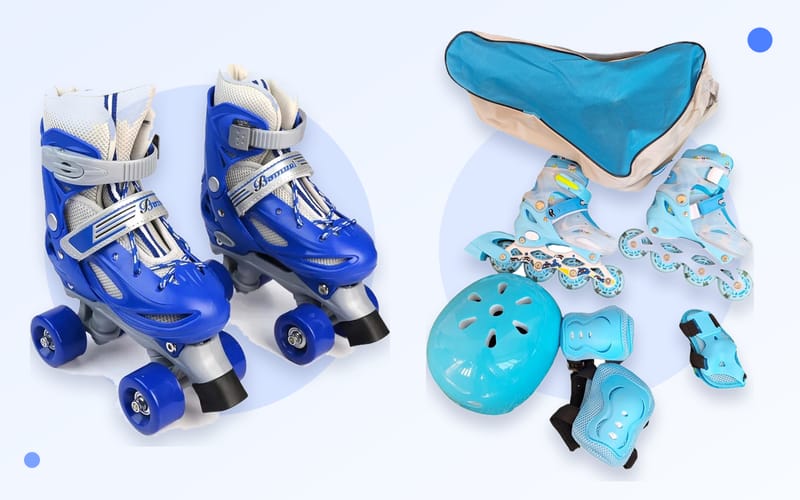
- Skates that fit. The heel should stay down and the toes should sit close to the front without curling. If you are not sure, read our kids skates size guide.
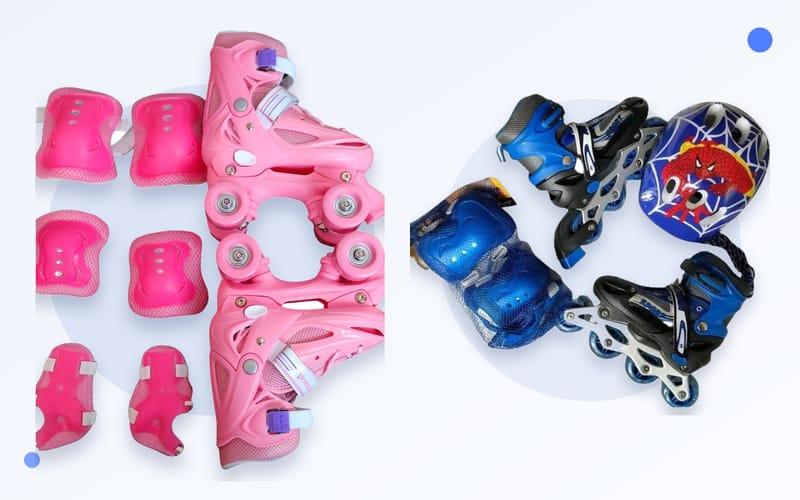
- Full protective gear. A helmet, knee pads, elbow pads and wrist guards. Falls are part of learning, so gear turns them into small bumps.
- The right place. Start with a patch of grass or a rug, then a flat, smooth surface with no traffic, such as a paved compound or tiled veranda.
Keep each session to 15 or 20 minutes. Children learn faster when they stop while it is still fun.
The 7-day plan at a glance
| Day | Goal | Where | Session length |
|---|---|---|---|
| 1 | Stand up, march and fall safely | Grass or rug | 15 minutes |
| 2 | Duck walk on a smooth surface | Flat concrete or tiles | 15 minutes |
| 3 | First short glides | Flat concrete or tiles | 20 minutes |
| 4 | Stopping with control | Flat concrete or tiles | 20 minutes |
| 5 | Longer glides with both feet | Flat open space | 20 minutes |
| 6 | Gentle turns | Flat open space | 20 minutes |
| 7 | Put it together with a game | Flat open space | 20 to 30 minutes |
Day 1: stand, march and fall
Start on grass or a rug, where the wheels barely roll. Ask your child to stand up with their feet about shoulder-width apart and their knees bent. Then let them march on the spot, lifting each foot a little.
Next, teach the fall before anything else. Show them how to bend low and drop forward onto their knee pads, then onto the wrist guards.
It sounds odd to practise falling. However, a child who knows how to fall is far less afraid of it. Our guide on how to fall safely on skates shows each step.
Day 2: the duck walk
Move to a smooth, flat surface. Ask your child to point their toes out in a V shape, like a duck, and take small steps forward. Hold both of their hands at first while you walk backwards in front of them.
This duck walk keeps the skates from rolling forward too fast. It also builds the feeling of pushing to the side, which is how skaters move.
Day 3: the first glides
Now turn the steps into tiny glides. Your child takes three duck steps, then brings the feet together and lets the skates roll. The knees stay bent and the arms stay forward.
At first the glide may last only a second. That is fine. Praise every glide, and let go of their hands for short moments once they feel steady.
Day 4: stopping
Stopping gives a child control, and control gives them confidence. Teach it early, before speed comes.
- On skates with a toe brake, your child slides one foot back and presses the toe brake into the ground.
- On other skates, teach the plough stop. Your child pushes both heels out and points the toes in, like a slice of pizza, until the skates slow down.
Practise from a slow glide to a stop at a line drawn in chalk. Our full guide on how to stop on skates covers more methods.
Day 5: longer glides
Once stopping works, your child can push harder and glide further. Encourage them to push with one foot to the side, then the other, and glide between pushes. Remind them to keep their weight over their feet and their eyes looking ahead, not down.
Day 6: turning
For a gentle turn, your child looks where they want to go, leans slightly that way and lets the skates follow. Set out two shoes or water bottles a few metres apart and ask them to skate around them. Practise turning both ways, since most children have a stronger side.
Day 7: put it together with a game
End the week with a game that uses every skill. Red light, green light is perfect: skate on green, stop on red. Our skating games and drills for kids has more ideas that keep practice fun.
Tips that make the week easier
- Stay close, then step back. Hold hands early on, then hover nearby, then watch from a few steps away.
- Keep the knees bent. Straight legs are the most common reason children fall backwards. Say "sit in a chair" as a reminder.
- Look ahead. Children who look at their feet lose balance more often.
- End on a win. Finish each session with something your child can already do well.
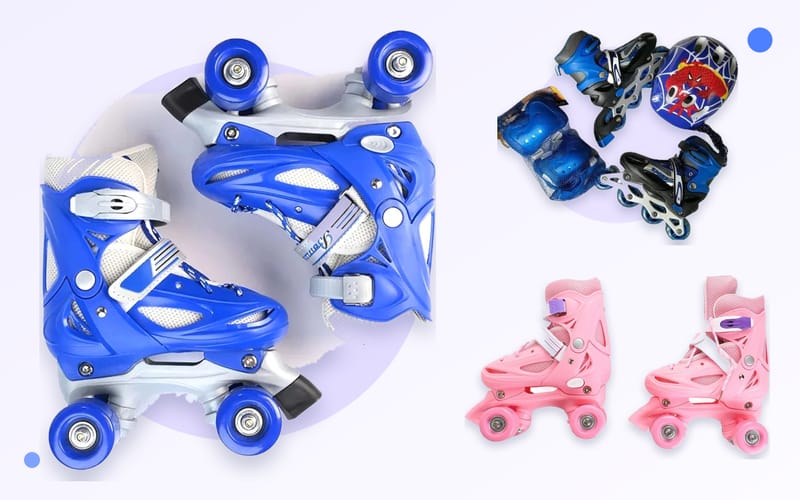
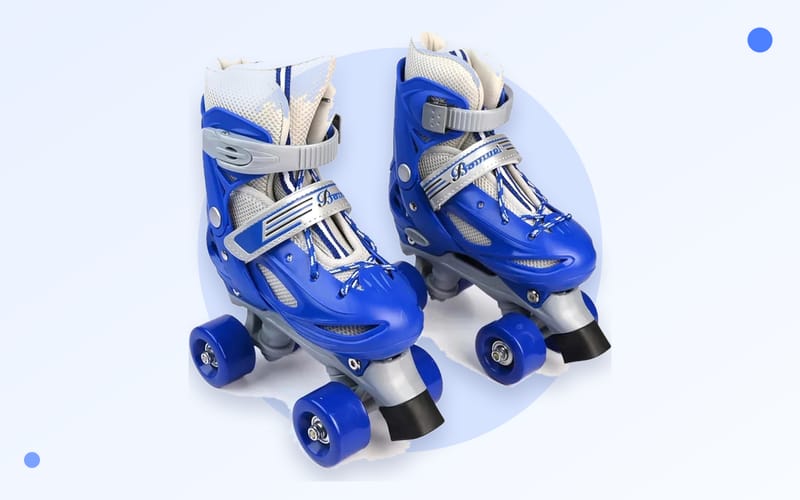
- Choose steady skates. For a first-timer, quad skates are steadier than inline skates. A careful child who wants inline skates may like the Blue Adventure skates.
Frequently asked questions
How long does it take to teach a child to skate?
It takes most children about one to two weeks of short, regular sessions to learn to glide. Stopping and turning usually come in the second or third week.
What is the best age to teach a child to skate?
The best age to teach a child to skate is usually from about 4 to 6, once they walk, run and balance well. Older children often learn faster because their balance is stronger.
Should my child learn on quad or inline skates?
Your child should usually learn on quad skates first, because two rows of wheels are steadier at low speed. Inline skates suit children who already have good balance.
How do I stop my child from falling backwards?
You stop your child from falling backwards by reminding them to bend their knees and lean slightly forward. A backward lean with straight legs is the most common cause of backward falls.
Do I need to know how to skate to teach my child?
You do not need to know how to skate to teach your child. You can walk alongside them, hold their hands and follow the steps in this plan in your normal shoes.
How often should my child practise skating?
Your child should practise skating three to five times a week for 15 to 20 minutes. Short, frequent sessions work better than one long session at the weekend.
What should my child wear for the first lesson?
Your child should wear a helmet, knee pads, elbow pads and wrist guards for the first lesson, plus socks that cover the ankles and comfortable clothes.
My child is scared. What should I do?
If your child is scared, go back to standing and marching on grass, hold both hands and keep the session very short. Celebrate small wins and never push them to go faster than they want.
Ready to start? Our best skates for beginners guide shows the steadiest first skates, with helmets and pads included.